

Go to New Games


































Be the first to comment


An apparently tranquil scene starts Stack Ball 3: a ball perched atop a multi-colored spiral structure. Nothing takes any time at all to get into gear after the first contact.
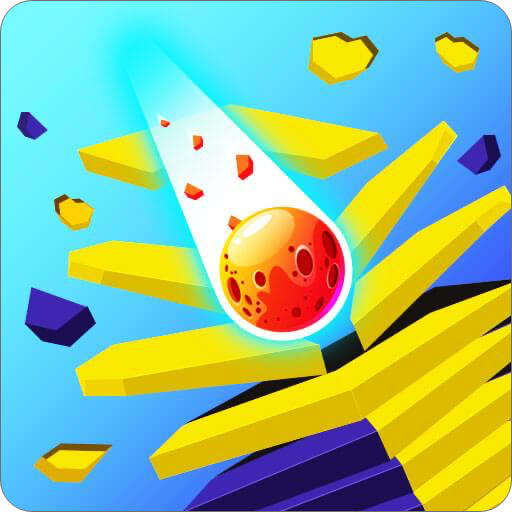
The game focuses entirely on the feeling of destruction; each fall carries its own unique suspense. This very simplicity becomes a powerful attraction, making Stack Ball 3 easy to pick up but hard to put down. High-contrast colors help players quickly identify safe and dangerous areas. The shattering effect when breaking platforms provides a satisfying feeling, while the collision sounds are concise. All of this combines to create a light yet distinctly addictive experience.
The sole objective: control the ball to fall through the spiral platforms to reach the bottom of the tower. Brightly colored sections allow for safe breaking, while a single touch of a black section will end the entire game. You have to constantly observe, read the rotation of the platforms, and decide precisely when to act. The depth of the game lies in the sequence of consecutive falls. When you break through multiple colored layers without stopping, the ball activates a fire state. This allows it to penetrate all layers—even the black ones. The game now takes a more reckless approach, pushing players to the boundaries of their instincts and speed.
The game maintains extremely intuitive controls: simply tap or hold to make the ball fall. But behind that simplicity is a very demanding requirement for timing. Excessive holding may lead the ball right into danger, while premature release can ruin the valuable falling sequence. The game teaches players how to control the pace, not only through quick reflexes but also through patience. Later levels are designed with denser layouts, faster rotation speeds, and more unpredictable color schemes.