

Go to New Games






























Be the first to comment

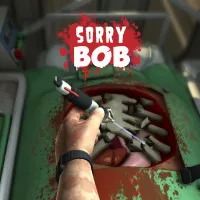
Despite its surgical setting, Sorry Bob doesn't attempt to recreate a hospital setting in a serious manner. There's no frantic blaring of heart monitors or a chief physician giving instructions.
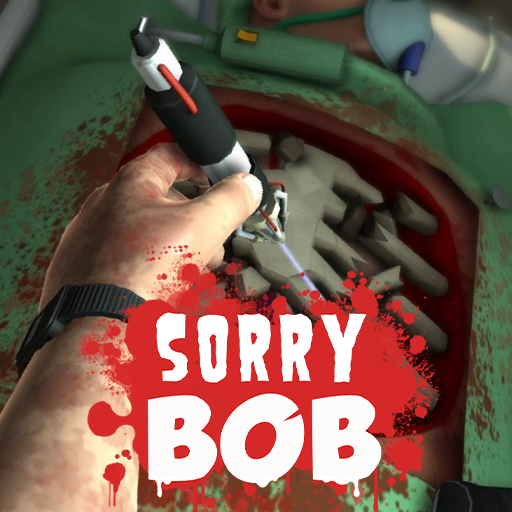
A lifeless body, a collection of familiar and unfamiliar medical tools, and almost unwilling hands lie before you. At that moment, the game reveals that it simulates human clumsiness and mistakes, not perfect medicine. This is not the role of a flawless doctor; rather, it is that of an individual operating under precarious circumstances. Difficult surgeries with uncontrollable tools require you to adapt.
Sorry Bob doesn't require you to complete the surgery perfectly. The game accepts clumsiness, misplaced cuts, and unnecessary movements, as long as you keep processing the situation. The format creates a very different progression compared to action or strategy games. There are no big win moments, only the feeling of doing better than the last time. In each operation, tiny choices are made: which instrument to use, which portion to treat, and what risks to take. Failure is not considered the end, but rather data for the next attempt. The pace of play is therefore cumulative, suitable for players who like to observe gradual progress.
Unlike other games that emphasize process, this challenge emphasizes hand movement in space. Scalpels, forceps, needles, and syringes all exist as objects with inertia. Lifting a tool is already a challenge, let alone manipulating it accurately. This difficulty in control forces players to relearn hand-eye coordination, adjusting force, angle, and pace. Over time, you don't become better at medicine, but you become more familiar with the simulation system.