

Go to New Games





























Be the first to comment

Dashmetry The 7 Seas Traveler, uses intricate designs and vibrant hues, but it doesn't aim to impress. All of the key hits in this level are a predetermined choice, making it a series of mechanical exercises.
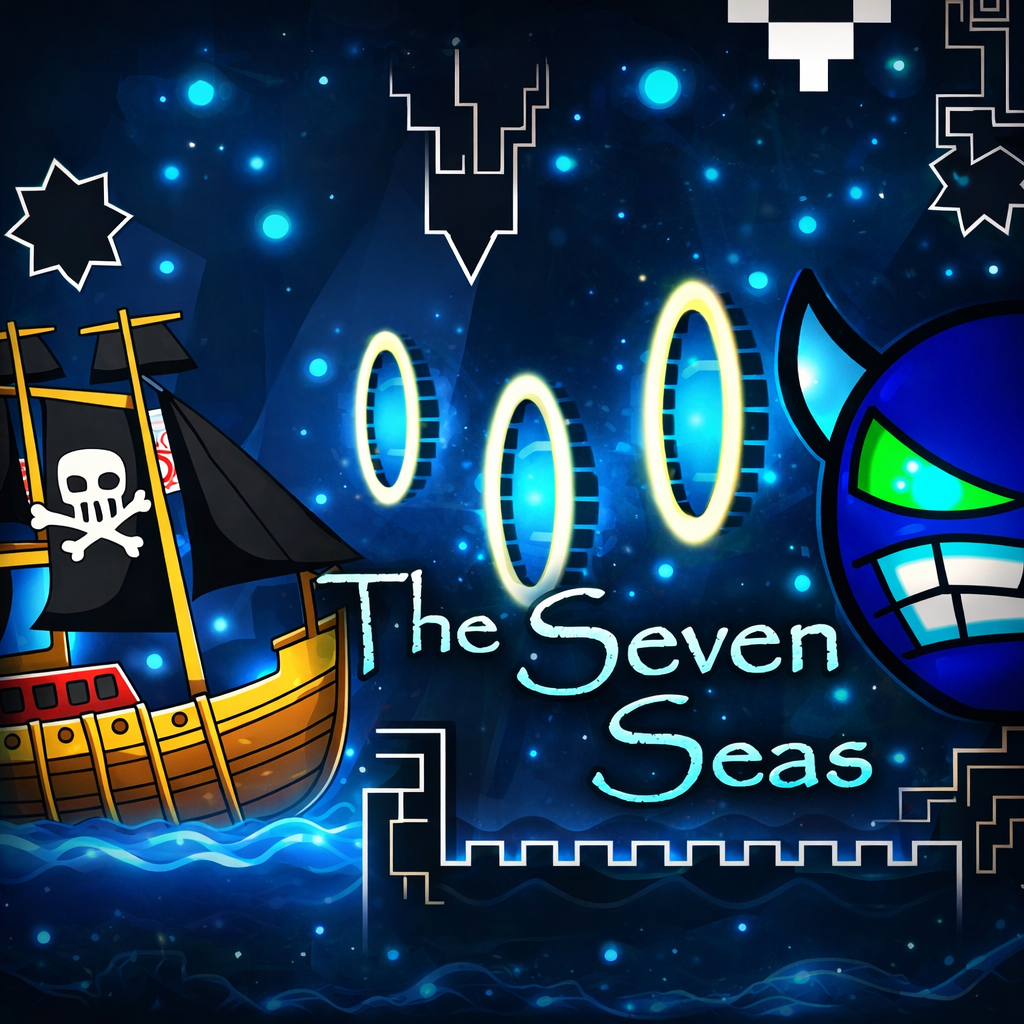
Players don't react to the situation but rather repeat a movement map that has been ingrained through repetition. The game operates through repetitive transformation loops between cube, ship, ball, and wave. Instead of making it harder, each loop is there to see how well you can keep the maneuver's quality. The cube appears to establish a precise landing platform. The next ship requires maintaining a stable flight axis without unnecessary oscillation. The ball and wave are inserted as cognitive adjustment segments. As the loop repeats, small mistakes are magnified, making memorization and rhythmic synchronization crucial.
A defining characteristic of the game is the limited recovery space. The character is almost always forced to stay in the center of the screen. This reduces the ability to correct mistakes reflexively and forces the player to get it right from the start. High-speed segments are not prolonged but are strategically placed to break established hand habits. Conversely, slow segments are not restful but act like mirrors, clearly reflecting any deviations in trajectory alignment.
Red orbs don't act as a lifeline; they are used as micro-adjustment points. Players need to understand the next trajectory before pressing. Mishandling a red orb doesn't cause immediate failure, but it breaks the subsequent chain of connections. Gravity reversals appear intermittently, not abruptly, but enough to force the brain to readjust direction. This type of challenge relies more on spatial awareness than hand speed.