

Go to New Games






































Be the first to comment

In a world where every racing game celebrates recklessness, Rail in the Air stands out as a proud exception. It demands players respect balance more than reckless acceleration.
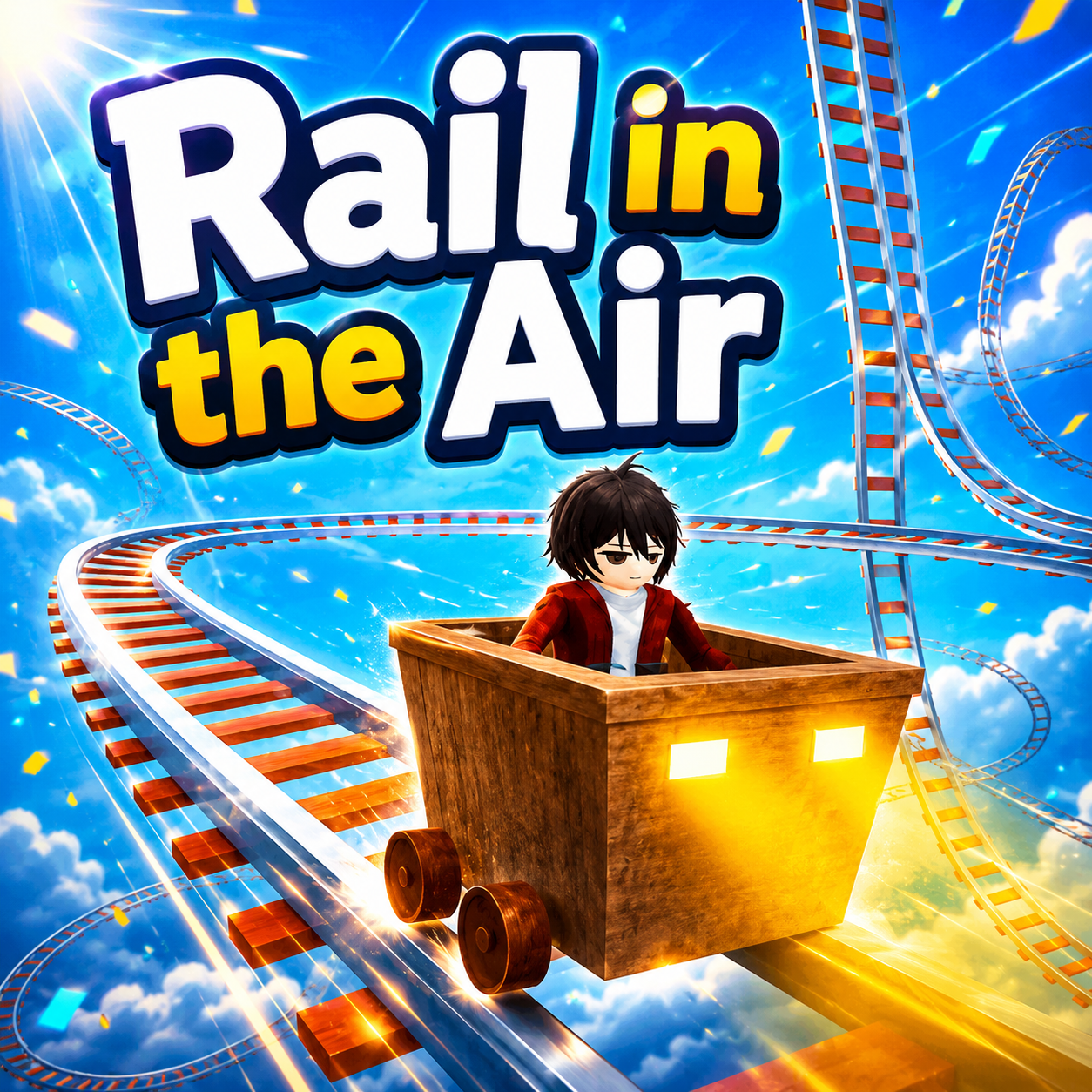
Scattered throughout an enormous ocean of clouds, your little wooden rail car hangs precariously from every square meter of track. This is where the cold-blooded can play, where they can make inertial physics their friend rather than their adversary. You write your survival narrative in the bright blue sky with each accelerator push and curve brake. As your train car plunges down steep slopes, the speed increases exponentially. This generates an enormous thrust, enough to tear the wheels off the rails in a split second. Conversely, on steep inclines, you must maintain enough inertia to overcome the peak or risk getting stuck. Because of the complex web of relationships formed by drag, friction, and kinetic energy, every run is unique. Experienced players understand that constantly holding down the W key is never a smart tactic. It's the shortest path to a catastrophic death from the heights.
Controls in Rail in the Air go far beyond the conventional definition of simple driving games. Each key press carries the weight of a life-or-death decision in the vast expanse of the air. Acceleration is done using the W or up arrow keys; however, holding them down turns the railcar into a missile. In addition to braking, the S key is the sole instrument that provides traction for those lethal spiral spins. Open the boat's technical dashboard using the C key to monitor its performance and spot instabilities early. And when failure strikes—and it inevitably will—the R key becomes your instant resurrection door. It will get you back on the track without requiring a long wait.
Success doesn't belong to those with the quickest reflexes but to those who know how to read the course. Skilled riders develop the habit of observing the horizon ahead, identifying hidden slopes and unexpected turns before they become apparent. This allows for smooth speed adjustments instead of dramatic sudden braking. Experts advise drivers to slow down before approaching a turn to retain control. Respecting downhill natural inertia saves fuel and keeps you calm in tight circumstances.